The only place on earth where Asiatic lions still live in the wild, in dry teak forest across Junagadh district.
Gir National Park & Wildlife Sanctuary is one of India’s most remarkable wildlife destinations and the world’s last remaining wild stronghold of the Asiatic lion. Located in the semi-arid landscape of Saurashtra in Gujarat, Gir is much more than a place to look for lions—it is a rich dry-deciduous forest ecosystem supporting leopards, deer, antelope, crocodiles, hundreds of bird species and a remarkable variety of flora.
The protected Gir landscape is characterised by undulating hills, valleys, plateaus, rocky terrain, grasslands, riverine areas and dry deciduous forest. The official Gir Lion website records more than 500 plant species and around 38 mammal species, 300 bird species and 37 reptile species within the ecosystem.
For travellers, however, the biggest attraction remains the possibility of encountering an Asiatic lion in its natural habitat. Gir National Park is the only place where the world’s surviving wild population of this lion subspecies can be seen. The species came close to extinction in the late 19th and early 20th centuries, but sustained protection and conservation efforts helped the population recover substantially.
Gir National Park Safari
A safari through Gir National Park is therefore less about ticking off a lion sighting and more about experiencing the forest. You may encounter chital, sambar, nilgai, chinkara, four-horned antelope, wild boar, langurs, crocodiles and, with luck, leopards and other predators. The forest is also an excellent destination for birdwatchers, with more than 300 recorded bird species, including raptors, owls, flycatchers and migratory species.
One of the most rewarding things about Gir is its changing character through the day. Early morning brings cooler temperatures, bird calls and active wildlife, while the forest becomes warmer and quieter later in the day. The landscape itself—dry teak forest, open grassland, rocky hills and seasonal watercourses—is an important part of the experience.
The Lion Story
The conservation story of Gir is central to understanding the destination.
The Asiatic lion once occupied a much larger range across parts of Asia, but by the end of the 19th century its population had collapsed dramatically. Protection initiated under the former Junagadh administration and later systematic conservation by the forest department helped prevent its extinction. The official Gir records show the lion population increasing from 177 in 1968 to 523 in 2015, with subsequent census figures showing further growth.
Today, lions have also naturally dispersed beyond the traditional Gir landscape into surrounding areas of Saurashtra.
Beyond the Lions
A common mistake is to think of Gir National Park as a destination where the only successful safari is one where you see a lion.
Gir’s biodiversity deserves equal attention.
The forest supports Indian leopards, hyenas, jackals, jungle cats, rusty-spotted cats, mongooses, civets and several herbivore species. Its rivers and water bodies support marsh crocodiles, while the surrounding habitats attract an impressive variety of birds.
For photographers and nature lovers, the combination of wildlife and landscape can actually make a safari memorable even without a big-cat sighting.
Devalia Safari Park
For travellers who have limited time or want a more predictable wildlife experience, Devalia Safari Park / Gir Interpretation Zone is another option.
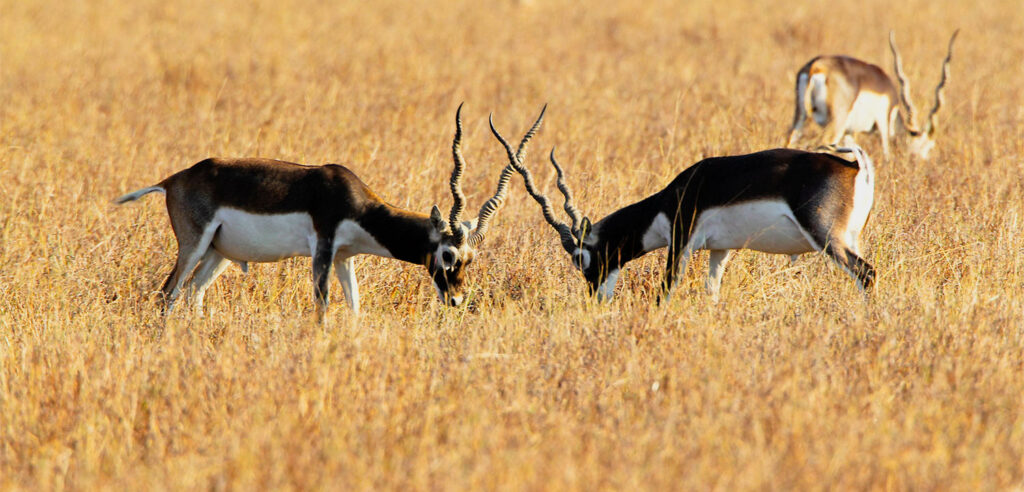
It is a fenced wildlife interpretation area designed to provide visitors with an accessible representation of Gir’s ecosystem. The official Gir National Park site describes it as a 412-hectare safari park containing representative wildlife and forest habitats, including lions, leopards, deer, nilgai, blackbuck, wild boar and birds.
The experience is different from a traditional open forest safari, so I would position it on Wander-Wise as an alternative or supplement to the main Gir Jungle Safari, rather than a replacement.
When to Visit
Gir’s main tourism season is during the cooler months. Gujarat Tourism currently recommends November to March, while the official park information identifies late November to early March as the cool and dry period.
The Gir Jungle Safari is currently closed annually from 16 June to 15 October for the monsoon period.
For a first visit, December to February is an especially comfortable period for combining wildlife viewing with other Saurashtra attractions.
Getting There
Sasan Gir is the main tourism base for visiting the park.
The nearest airport is Keshod, while Diu is another nearby option. Junagadh and Veraval are important railway/road gateways, with Sasan also having rail connectivity. The official Gir access information lists Keshod at around 60 km and Diu at around 100 km from Gir.
Gir National Park also works particularly well as part of a wider Saurashtra road trip, combining wildlife with destinations such as Somnath, Junagadh, Diu and Girnar.
The Wander-Wise Take
Come to Gir looking for a lion. Leave having discovered a forest.
The roar of an Asiatic lion may be the headline, but Gir’s real magic lies in everything around it—the dry teak forests, alarm calls of spotted deer, peacocks crossing the trail, crocodiles near the water, raptors circling overhead and the anticipation of what might appear around the next bend.
And when a lion finally steps out onto the trail, even for a few quiet seconds, you understand why this forest is one of India’s most extraordinary wildlife experiences.
Gir isn’t simply a safari destination. It’s a conservation story you can walk into.
Location on Map
WHY VISIT
Why Visit Gir National Park?
Discover what makes Gir National Park a destination worth experiencing.
Scenery
The landscapes around Gir National Park are the main reason most people make the trip.
Local Culture
Food, festivals and daily life in Gujarat that you will not find in a guidebook.
Things To Do
Enough to fill 2-3 days without rushing between sights.
Best Season
Dec-Mar offers the clearest weather and the most open routes.
Photo Gallery
Discover Gir National Park through beautiful photographs.
Top Attractions
Gir National Park Main Viewpoint
The most photographed outlook in Gir National Park, best in the soft light just after sunrise.
1 Hour
Free
Best Time:
Sunrise
Gir National Park Old Quarter Walk
A slow wander through the older lanes of Gir National Park, where the everyday rhythm of Gujarat is easiest to see.
2-3 Hours
Free
Best Time:
Morning
Gir National Park Heritage Site
The principal historic or natural landmark at Gir National Park and the reason most itineraries include it.
2 Hours
Rs 25-600
Best Time:
Morning
Gir National Park Local Market
Produce, crafts and street food. Come hungry and carry small notes.
1-2 Hours
Free
Best Time:
Late afternoon
Gir National Park Sunset Point
The spot locals head to at the end of the day, and usually the best photograph you will take in Gir National Park.
1 Hour
Free
Best Time:
Sunset
Suggested Itinerary
1
Arrival and Settling In
Meals
Breakfast not included
2
The Main Sights
Meals
Breakfast
3
Getting Out of Town
Meals
Breakfast, packed lunch
Estimated Budget
Accommodation
4800
Mid-range guesthouse or 3-star hotel, per night.
Food and Drink
2600
Three meals a day at local restaurants.
Local Transport
2200
Shared taxis, autos and short transfers.
Activities and Entry
1700
Site entry fees and one paid activity.
Miscellaneous
700
Tips, SIM, laundry and small extras.
Weather & Best Time to Visit
Understand the weather throughout the year to plan the perfect trip.
January
High
Temperature
10 to 25 C
Rainfall
Minimal
Humidity
Low
February
High
Temperature
10 to 25 C
Rainfall
Minimal
Humidity
Low
March
High
Temperature
22 to 33 C
Rainfall
Minimal
Humidity
Low
April
Moderate
Temperature
28 to 42 C
Rainfall
Minimal
Humidity
Low
May
Moderate
Temperature
28 to 42 C
Rainfall
Light
Humidity
Moderate
June
Low
Temperature
28 to 42 C
Rainfall
Heavy
Humidity
High
July
Low
Temperature
22 to 33 C
Rainfall
Heavy
Humidity
High
August
Low
Temperature
22 to 33 C
Rainfall
Heavy
Humidity
High
September
Low
Temperature
22 to 33 C
Rainfall
Heavy
Humidity
High
October
Moderate
Temperature
22 to 33 C
Rainfall
Light
Humidity
Moderate
November
Moderate
Temperature
10 to 25 C
Rainfall
Minimal
Humidity
Low
December
High
Temperature
10 to 25 C
Rainfall
Minimal
Humidity
Low
Travel Information
Everything you need to know before planning your journey.
Destination Facts
State
Gujarat
Best Time
Dec-Mar
Ideal Duration
2-3 Days
Starting Budget
Rs 12,000 per person
Coordinates
21.1245, 70.8244
Region
West India
Languages
Hindi, English and the local language of Gujarat
Our Rating
5 out of 5
Travel Essentials
Currency
Indian Rupee (INR)
Language
Hindi, English and the local language of Gujarat
Emergency
112 (national emergency number)
Connectivity
Jio and Airtel have the widest coverage
Getting Around
Autos, shared taxis and app cabs where available
What to Pack
Layers suited to Dec-Mar
Health
Drink filtered or bottled water only
Connectivity Tip
Carry a power bank
Frequently Asked Questions
Dec-Mar is the most comfortable window for Gir National Park, with the most reliable weather for sightseeing and outdoor activity.
Around 2-3 days covers the main sights at a relaxed pace. Add a day or two if you want day trips nearby.
Budget from roughly Rs 12,000 per person for accommodation, food and local transport, excluding long-distance travel to Gujarat.
Gir National Park is in Gujarat, west india, at approximately 21.1245, 70.8244.